Friday, December 17, 2010
Observation (12/15/10)
On Wednesday morning at about 5:45 am, at my drive way in Osprey, I saw the Geminid Meteor Shower. I was only outside for about 15 minutes but I was able to see 3 streaks of light above in the north near Ursa Major. The sky was very clear and I could also see Jupiter in the east. It was very bright, and in the southwest I could see Orion and Betelgeuse. This was my second time seeing a meteor shower and it was very exciting every time I was able to spot a streak of light.

Saturday, December 11, 2010
APOD 2.6
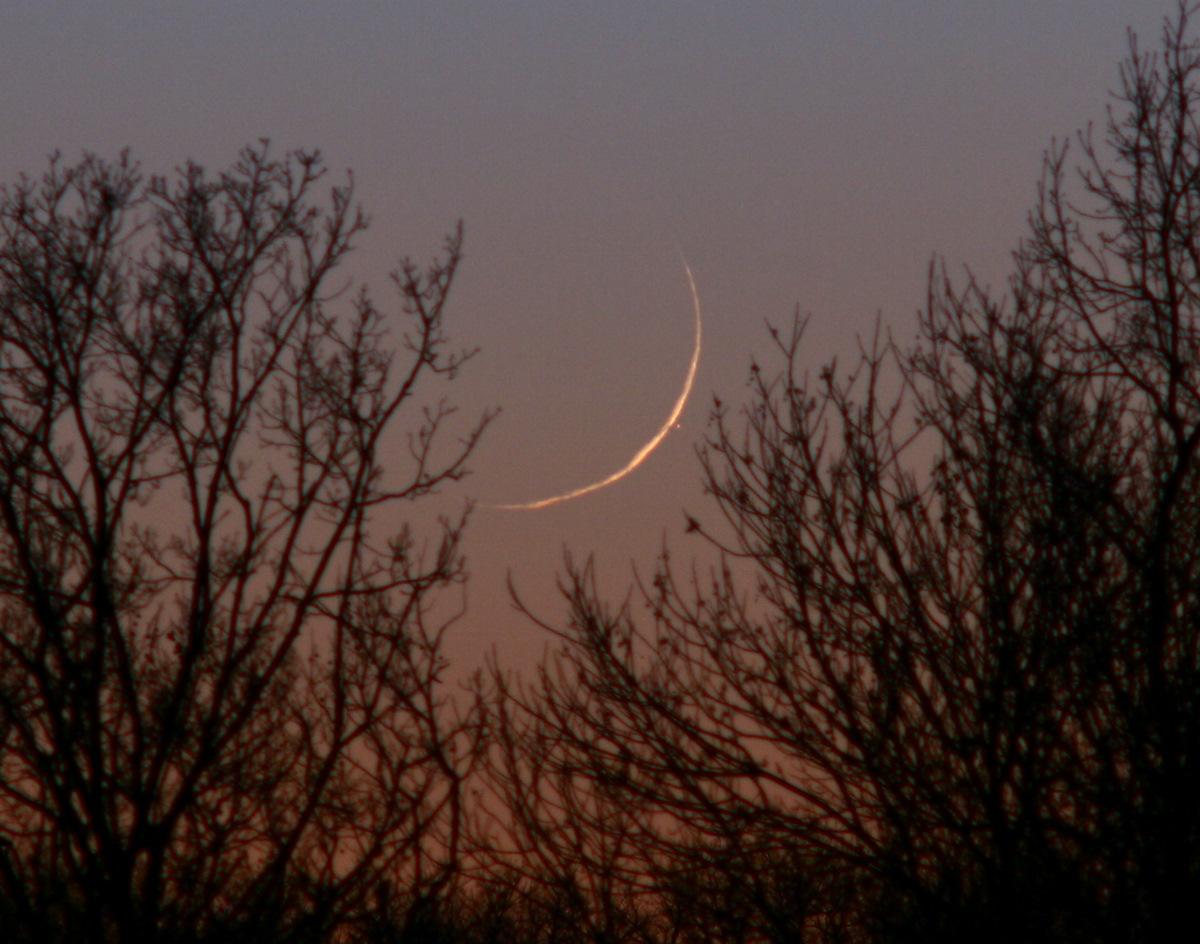
This picture showed a crescent moon that was one day old on Monday, December 6. The moon had just passed in front of Mars which can be seen as a little point of light near the right edge of the moon. This is also known as the occultation of Mars. This picture was taken from De Soto, Kansas. As amazing as this is, the even that people will be looking forward to this month is the total lunar eclipse on the night of December 20 to the 21st. When the moon is completely in Earth's shadow, the moon's surface will appear red because the surface will still be illuminated by the sunlight, reddened and refracted into the dark shadow region by a dusty atmosphere. This will be a wonderful thing to see because I have never seen a lunar eclipse before. Astronomy is a great subject to study because you an actually go outside and see what you've learned.
Friday, December 3, 2010
APOD 2.5
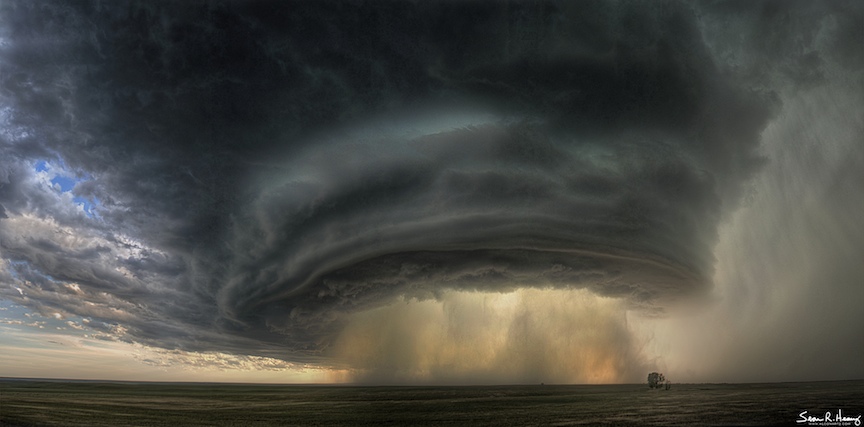
This astronomy picture is not as closely related to astronomy as the other pictures but it still has to do with science. This picture shows a supercell in Glasgow, Montana, USA. A supercell is a really large storm with rotating upward winds. These can often become tornadoes with rain and even hail. This is one of the more dangerous and severe storms. However, this particular did little damage and lasted only a few hours. I was not aware that there were storms like these. I only imagined the typical tornadoes that look like the swirling cyclones. I was surprised to see one this big and to know it cause minor damage because of its largeness. These are normally common in the plains which is why this supercell took place in this field in Montana. It looks amazing but it would have probably been terrifying if one was actually there.
Thursday, November 18, 2010
APOD 2.4
"Frosted Leaf Orion" (November 17, 2010)
This picture shows the night sky from Earth from Japan. It really illustrates how much living in the city affects my viewing of the stars. From this location away from all the city and the lights, so many stars can be seen. At my home, where I usually make my observations, I would never be able to get the view that this photographer got in Japan.
In this photograph you can see, the constellation Orion. You can clearly see the stars that make up his belt and dagger. You can also see Sirius, the brightest star in the sky, a little blue cluster in the sky, known as the Pleiades open star cluster, and Betelgeuse, the red giant. And, the larger streak that is seen in the left of the photo is a meteor from the Leonid meteor shower. Recently we have learned in star lab that the Pleiades open star cluster is the most famous star cluster on the sky because it can be seen without binoculars even in the city. However, the thing that most surprised me was Betelgeuse. It is a red giant, but I didn't realize how much of a giant it was. Apparently if it was put at the center of our Solar System it would extend to the orbit of Jupiter. That is huge considering the relative sizes and the distances between the planets that we have learned about in class. It still hard to comprehend how large these stars and planets can be.
This picture shows the night sky from Earth from Japan. It really illustrates how much living in the city affects my viewing of the stars. From this location away from all the city and the lights, so many stars can be seen. At my home, where I usually make my observations, I would never be able to get the view that this photographer got in Japan.
In this photograph you can see, the constellation Orion. You can clearly see the stars that make up his belt and dagger. You can also see Sirius, the brightest star in the sky, a little blue cluster in the sky, known as the Pleiades open star cluster, and Betelgeuse, the red giant. And, the larger streak that is seen in the left of the photo is a meteor from the Leonid meteor shower. Recently we have learned in star lab that the Pleiades open star cluster is the most famous star cluster on the sky because it can be seen without binoculars even in the city. However, the thing that most surprised me was Betelgeuse. It is a red giant, but I didn't realize how much of a giant it was. Apparently if it was put at the center of our Solar System it would extend to the orbit of Jupiter. That is huge considering the relative sizes and the distances between the planets that we have learned about in class. It still hard to comprehend how large these stars and planets can be.
Saturday, November 13, 2010
Great World Wide Star Count and Observations (11/12/10)
Yesterday, (November 12, 2010) at about 8:06 pm outside on my driveway, I located cygnus in the west. The skies were clear and I could see the stars that made up the endpoints of the cross and the star at the center. It seemed to match chart 3 that was shown on the website for the Great World Wide Star Count.
Also at 6:10 am on the same day on my driveway, I was able to see Venus in the east. It was very bright. The skies were clear and the sky was starting to get bright and not too many stars were visible due to the rising sun.
Also at 6:10 am on the same day on my driveway, I was able to see Venus in the east. It was very bright. The skies were clear and the sky was starting to get bright and not too many stars were visible due to the rising sun.
Friday, November 12, 2010
APOD 2.3
NGC 7023: The Iris Nebula (November 12, 2010)
This picture shows the Iris Nebula, which is located in the constellation Cepheus. It is named the Iris Nebula because of its resemblance to flowers. The center of the "flower" is a bright shining light, surrounded by blue petals. The center is actually a hot, young star, and the blueish colors come from the scattering of white light off dust particles that survived the stars birth. This scattering is similar to Rayleigh scattering, which is responsible for the color of the sky on Earth. This also explains why the Iris Nebula is a reflection nebula versus an emission nebula. Reflection nebulae because they cannot create their own light and scatters the light of other stars nearby. Emission nebulae are clouds of hot gas that are hot enough to emit light themselves. This APOD was interesting because I was not aware of the different types of nebulae and I did not know that some nebulae could not create light themselves. I thought all nebulae created their own light. It was also interesting to read about the experiment in "The Feynman Lectures On Physics" which explained in detail why the scattering of light created the blue color we see.
This picture shows the Iris Nebula, which is located in the constellation Cepheus. It is named the Iris Nebula because of its resemblance to flowers. The center of the "flower" is a bright shining light, surrounded by blue petals. The center is actually a hot, young star, and the blueish colors come from the scattering of white light off dust particles that survived the stars birth. This scattering is similar to Rayleigh scattering, which is responsible for the color of the sky on Earth. This also explains why the Iris Nebula is a reflection nebula versus an emission nebula. Reflection nebulae because they cannot create their own light and scatters the light of other stars nearby. Emission nebulae are clouds of hot gas that are hot enough to emit light themselves. This APOD was interesting because I was not aware of the different types of nebulae and I did not know that some nebulae could not create light themselves. I thought all nebulae created their own light. It was also interesting to read about the experiment in "The Feynman Lectures On Physics" which explained in detail why the scattering of light created the blue color we see.
Friday, November 5, 2010
Observations
Date: November 5, 2010
Time: 6:10 AM
Location: My driveway in Osprey
Weather: A few clouds but the stars were still visible
Today when I went out this morning the moon was not visible, but I was again able to spot Orion above in the south/southwest. Looking at the other stars in the sky, i tried to find other constellations and i was surprised to be able to identify Ursa Major. It was in the north, and it certainly was larger than Ursa Minor.
Time: 6:10 AM
Location: My driveway in Osprey
Weather: A few clouds but the stars were still visible
Today when I went out this morning the moon was not visible, but I was again able to spot Orion above in the south/southwest. Looking at the other stars in the sky, i tried to find other constellations and i was surprised to be able to identify Ursa Major. It was in the north, and it certainly was larger than Ursa Minor.
Subscribe to:
Posts (Atom)